
- Conference Report 2025
- Conference Report 2024
- Conference Report 2023
- Conference Report 2022
- Conference Report 2021
- Conference Report 2020
- Conference Report 2019
- Conference Report 2018
- Conference Report 2017
- Conference Report 2016
- Conference Report 2015
- Conference Report 2014
- Conference Report 2013
- Conference Report 2012
- Conference Report 2011
- Conference Report 2010
- Conference Report 2009
- Conference Report 2008
- Conference Report 2007
- Conference Report 2006
- Conference Report 2005
- Conference Report 2004
Conference Report 2023
14th October 2023
Our conference this year was held at The Abbey Centre in Westminster. It was lovely to see penfriends, speakers and supporters gathered together once more and we welcomed many long-time friends and new members to what was a very enjoyable day.
For our first session of the programme we heard from four penfriends, each with a different and personal experience to share. Liz spoke about her friendship with her friend in Florida, who had lost friends and family over the years and how she continues to assure him she will always be with him. Caroline then spoke about her Texas friendship - her penfriend has basic English and she has basic Spanish so they both write in a combination of the two languages. He has had many health problems over the years and it has helped him to be able to talk about these with her and also about his introduction to the new technology of electronic tablets. He is currently in a separate medical unit which is particularly isolating.
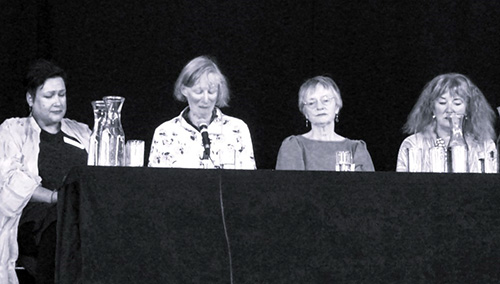
Mary was the third speaker in this session. She and her Florida pen-friend have been writing for 13 years and he now has a LWoP sentence. She spoke of how, initially, she had been reticent to talk about some of the good things in her life until her penfriend assured her that sharing all aspects of her world would be a great distraction for him and over the years he has confirmed that this really has helped him. The final speaker was Penny, whose Florida penfriend loves to paint and has really appreciated the variety of photos she has shared with him over the years, especially those of buildings, one of his favourite topics. He has also been very helpful in advising on construction issues when she has had problems in her home! Liz, Caroline, Mary and Penny were thanked for sharing their individual friendships with us.

The next section of the day was a more sombre topic when Sue Fenwick, HW Founder, spoke of a promise she had made some years ago to be there for a Texas prisoner at his execution. She first became involved with Texas in 1994 and visited many friends there, initially at the Ellis Unit and subsequently at Polunsky when DR was moved there in 2000. Over the years she had come to know Robert well and he had ultimately asked if she would be there with him if his final days should come. A few years later a date for his execution was set. Sue spoke of the final three days they shared in the visiting room and how, touchingly, many of Robert's long-time friends there on the row had arranged to also have visits during those days so that they could show their care and friendship for him - there had been no contact between them at all for many years since the move to the solitary confinement of the Polunsky Unit in 2000. Visits were as always behind glass with no verbal contact with other prisoners but the support and seeing them again had meant a lot to Robert.
Sue and Robert had talked of many things in his final three days, good and sad memories that he had, regrets, hopes and even a sense of 'normality' when he had said he was hoping to finish his Harry Potter book on his last evening. On the final day the guards terminated their visit at 12 noon to take Robert to The Walls Unit, a journey about an hour away, where executions in Texas take place. The next time they saw each other was six hours later, again through a large glass window where, just two feet away, Robert was laying on a gurney with the process ready to begin. After a final statement he had gently smiled and said "It's OK" and then his life had quietly ended. Back in the outside world half an hour later Sue said she was struck by how nothing seemed to have changed, with traffic driving by and people going about their lives as before and how unreal that had seemed.
Our next speaker was Dr Pablo Stewart, forensic psychiatrist and regular contributor to our Human Writes conferences. Pablo spoke movingly of some of the more memorable cases he has been engaged in over his many years of being involved with US death penalty issues. He clarified that much of his work with these is done pre-trial and how he aims to meet with the families of his clients if possible to learn about their backgrounds and other relevant and personal information that may assist with their defence.
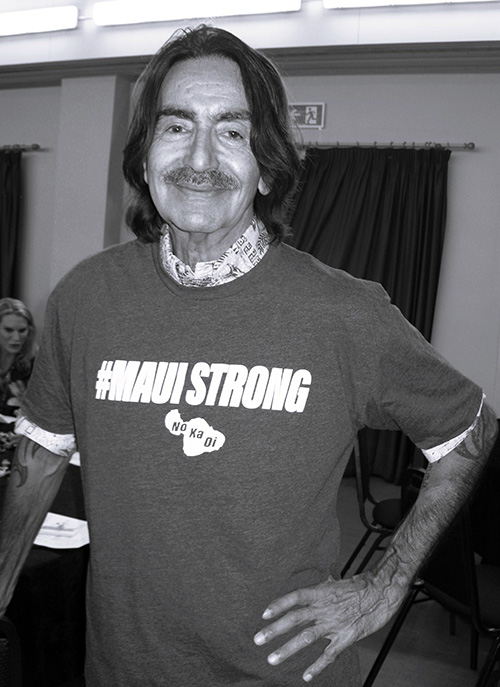
He explained how, even in states that don't have the death penalty, a defendant can be moved into the federal system, with capital punishment for a crime that can cross jurisdictions. He mentioned that President Biden had cut back significantly on federal executions and also quoted some statistics on racial disparity in capital punishment cases. In addition, some states do not allow a mental health defence to be presented.
Pablo spoke about jury selection processes and the questions that can be asked during the initial trial commencement stage. He clarified that in certain states death penalty cases can been divided into two phases, the first being a 'guilty or innocence' finding and the second phase moving on to the punishment to be awarded. He explained how some prosecutors can be aggressive towards him in court and how he has had to 'toughen up' in these scenarios.
We were delighted that Pablo could be with us again this year and he ended his session with responses to questions from our HW members.

For our afternoon session we were very pleased to once again have HW Patron, Clive Stafford Smith, with us. Clive introduced us to Billy Moore, who spent over sixteen years on death row in Georgia. Clive and Billy had originally met in 1980 when Clive was working with Team Defence in Georgia, prior to him going to law school.
Clive began by talking briefly of the early years he had known Billy. He then took Billy through his story in a very interesting 'question and answer' format. Billy talked openly about his background and the events that led him to death row. He recalled that at his trial there was no jury, just a judge presiding over the trial, which had lasted less than one day. Billy's solo defence lawyer had decided that it would be better for him to admit to the charge and ask for mercy so he had accordingly taken the stand on that basis - however, the judge had already written up a sentence of death before the 'trial' began.
Whilst on death row, Billy sought forgiveness and developed a strong Christian faith. He studied the Bible, which he taught to fellow inmates, earning a bachelor's degree from a Bible college.
In total Billy received thirteen execution dates during his 16½ years on death row. Immediately after his trial, with his execution looming on Friday 13th September 1974, he wrote to 30 members of his victim's family asking for forgiveness. He hadn't expected them to respond but every one of them did and this started a regular correspondence between them. What he hadn't expected was that they would also petition the courts for his freedom and that all 30 members of the family would take a bus to the parole board hearing to ask for his freedom. Billy's sentence was commuted to life in 1990 and the following year he was released.
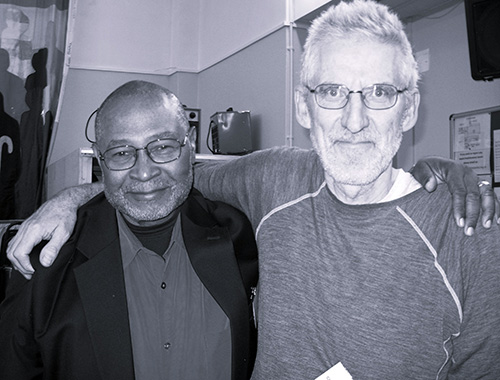
Billy spoke warmly about his penfriends and how much it had meant that they had shared their lives with him. He now spends his time ministering in churches and sharing his journey and faith. It had been a pleasure and a privilege to have him and Clive with us.
The conference concluded with our traditional lighting of candles, followed by thanks to all our speakers and to our HW team and members who had all made it such a memorable day.
In a Death Row prisoner‘s own words:
“I thanked God this morning for the lovely People in my life and for the overflowing gift of love that is in my heart for you and my penfriends. It‘s a very far step from the heart of ill emotions that I used to have years ago.”
“I thanked God this morning for the lovely People in my life and for the overflowing gift of love that is in my heart for you and my penfriends. It‘s a very far step from the heart of ill emotions that I used to have years ago.”
Human Writes Patrons
"The very essence of the death penalty is to tell people that they are somehow sub-human, not fit to live. Yet even those people I have represented who did what they were accused of - a surprisingly limited number - have always been much better people than their worst fifteen minutes, as are we all. Those who recognise this by reaching out to the men and women on death row are true heroes, though I suspect they gain as much as they give to the relationship."
Clive Stafford Smith OBE, Founder of Reprieve and Patron, Human Writes
"As a journalist who has lived and worked in the United States, the horror of death row is one of the issues that never leaves you. The thread of humanity that Human Writes manages to sustain with men and women on death row is a profound contribution to keep alive the hope of life. Capital punishment is now on the retreat in America, but the numbers awaiting their fate are still very considerable. I am very honoured to have become a Patron of Human Writes and will hope to do my best to put my shoulder to the wheel".
Jon Snow Broadcaster and journalist, Patron, Human Writes
"I know what it is like to live in a cell for decades and feel that the whole world hates you. I never expected to be able to live again as a contributing member of a community. Prison life was precarious and unpredictable but I met people who worked there who wanted to help me and people like me - and I'm lucky that I live in a society graceful enough to offer me a second chance. At least I had hope. Hope for many of the people supported by Human Writes has all but been extinguished. Letters to people on Death Row let them know that however low they may have fallen, they are still human beings. They still have value and are worth caring about and letters might just help to keep hope alive. That is why I am honoured to have been invited to be a patron."
Erwin James 1957 - 2024, author and Guardian columnist, Patron, Human Writes
Past Reports
Prisoner Art and Writing
"The volunteers of Human Writes seek to hold out the hand of friendship to men and women facing the death penalty. I am pleased to encourage them in their writing"
Most Reverend and Rt Hon George L Carey, former Archbishop of Canterbury
"No matter its circumstances, dying is one of the most important things we ever do. I applaud all who offer compassion and hope to those facing death, especially in the terrible circumstances of Death Row. May God bless your work."
His Eminence Cardinal Vincent Nichols, Archbishop of Westminster