
- Conference Report 2025
- Conference Report 2024
- Conference Report 2023
- Conference Report 2022
- Conference Report 2021
- Conference Report 2020
- Conference Report 2019
- Conference Report 2018
- Conference Report 2017
- Conference Report 2016
- Conference Report 2015
- Conference Report 2014
- Conference Report 2013
- Conference Report 2012
- Conference Report 2011
- Conference Report 2010
- Conference Report 2009
- Conference Report 2008
- Conference Report 2007
- Conference Report 2006
- Conference Report 2005
- Conference Report 2004
Conference Report 2022
Try as they might, not even train strikes or the London marathon could stop the first in-person Human Writes conference since 2019. Writers, speakers, and supporters all gathered in central London to hear speakers, some of whom had flown in from the US and others from closer to home, who braved the chaotic public transport.
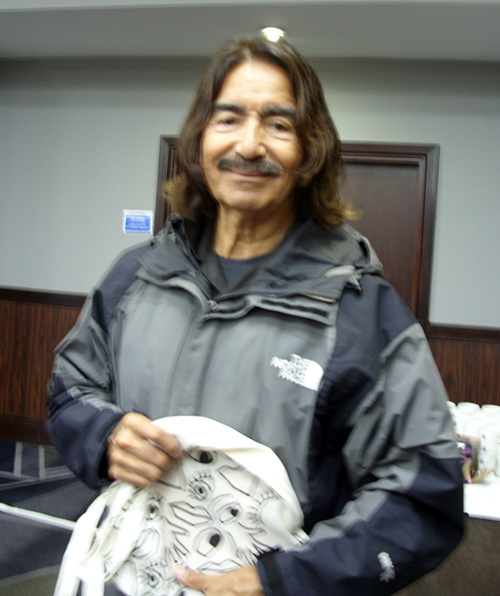
Our first speaker was Dr Pablo Stewart, a forensic psychiatrist and long-time contributor to Human Writes conferences. Pablo described the global phenomenon of politics drifting to the right and mentioned that in the US there is an increasing tendency towards ‘purple’ states, that is, those that are more contested between each side of politics. He discussed how, under the current administration, the US has functionally eliminated the death penalty at a federal level, if not technically. Despite that, the momentum behind the death penalty has accelerated in some states.
Pablo emphasised how important the work of Human Writes is for our death row friends. He highlighted the significant proportion of inmates who do not have contact with the outside world and recounted how one of those he had met had recognised him based on a picture he had seen in a Human Writes newsletter. He described how the prisoner's whole demeanour began to sparkle when he talked about letter writing with his penfriend.
Inequalities in life were front-and-centre, as Pablo described them, as a critical factor behind people who end up in prison. In particular, he pointed out that the overwhelming majority of people on death row are from lower socio-economic groups, went to under-performing schools and often lived in a one-parent family environment. Beyond the death penalty, he mentioned that there is currently no movement against reassessing ‘Whole Life’ sentences except for those who committed their crimes as adolescents. Finally, Pablo took a step back from the details with a quotation from Martin Luther King, Jr: “The arc of the moral universe is long, but it bends towards justice.”
Our second speaker was Clive Stafford-Smith, Human Writes Patron and death penalty lawyer. After explaining why more people should appreciate the sport of cricket, he launched into a fascinating discussion about the legal process behind capital cases and their appeals. He introduced his new non-profit organisation, 3D Centre, and explained that as a death penalty lawyer in the US, there is an issue about speaking the language of American jurors. He noted that in different states the jurors’ personal beliefs can become central to how lawyers on both sides interact with them and how judicial arguments are formed in the courtroom. This means cases can revolve around triggering emotions rather than an impartial analysis of hard facts and evidence.
Next, Clive discussed how many people argue that the current death penalty system works because innocent people can be proven as such through the appeals process. In response, he talked about how he has worked to show this is not the case by assessing how some people have been executed while innocent. Making documentaries has been particularly helpful.
Clive argued that the job of lawyers is to bring power to the powerless. But innocent or guilty, this is an uphill battle due to the minimal funding afforded to defence teams relative to prosecutors. This can particularly be the case for those sentenced to the 'slow death penalty' - otherwise known as life without parole. These inmates receive very little help compared with those on death row. And while the latter cases may be more pressing, this presents a distressing outlook for those sentenced to life without parole who want to appeal their cases.
The impossible trade-off between the death penalty and life without parole was made particularly stark when Clive introduced Ryan Matthews and his sister Monique Coleman. Ryan was sentenced to death in Louisiana and eventually exonerated in 2004. Clive explained that when Ryan was being sentenced, he said that it would be better to receive the death penalty as he would have access to more resources in order to appeal his conviction.
Monique then discussed her campaign for her brother’s innocence. In remarks that were quite poignant for the writers in the room, she noted the importance of family support for inmates as she saw how easily that can break down. Monique went on to discuss her brother’s trial. To start, the jury was heavily racially weighted with a significant majority of white people. The theme of impossible choices was repeated as Monique recalled how during the process, Ryan was pushed to do a deal which would have involved a guilty plea in order to avoid the death penalty. He refused as DNA evidence was presented that showed he was not guilty - and yet he was convicted. Thankfully, Ryan was eventually exonerated but Monique’s conclusion was in equal parts honest and tragic as she remarked that even though Ryan is now free, the whole experience left her convinced that the justice system does not work.

Ryan then gave us a first-person perspective of his case and the life he now leads. His story was a case study for why Human Writes exists. He talked about the pressure he felt to 'keep a mask on' throughout his trial and while distressing character assassination tactics were used. His sentencing was particularly stressful and he was deeply concerned about the effect on his family and thus constrained his emotions. The way he narrated the pain he felt when he saw his mother cry at his sentencing made it clear that this was a moment permanently etched in his memory.
There were interesting parallels between the relationships Ryan formed with others on death row and their Human Writes penfriends. He explained that in prison no one talks about their crimes so you form relationships with inmates as they are in the moment. He then talked about his penfriend and how she made him feel so much better, particularly when she visited him in prison.
Today, Ryan is married and has three children. He has a college degree and is currently studying for an MBA. He mentioned that the death row experience taught him not to give up but, even though his life is coming together, he always feels like he is playing catch up. Looking to the future, Ryan mentioned the importance of programmes that keep kids out of trouble, such as after-school clubs.
For the final session of the morning, attendees met in state groups with their co-ordinators, catching up with state news and meeting fellow penfriends.
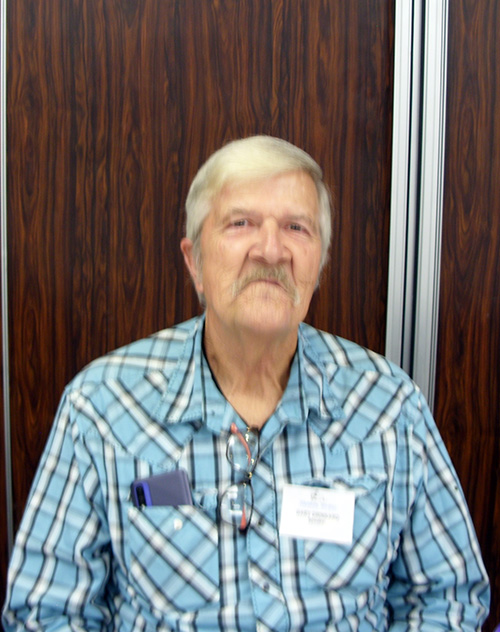
Our afternoon speaker was Gary Drinkard who was also sentenced to death, before being exonerated in 2001. Many of the themes discussed by the earlier speakers permeated throughout Gary’s story. He talked about his family troubles, his arrest, and his subsequent struggles with the under-resourced public defence system. When he discussed his case, he echoed Clive’s comments as he described how the case brought against him was built around his identity and troubled history rather than the evidence.
The camaraderie on death row that Gary described was heartening. He said that inmates tried to present themselves as being better than society perceived them to be. Sadly, he also described the mental anguish that many experience and said that he contemplated suicide after he lost his first appeal. He also noted the vast racial disparities that impact black people and other minorities. Gary’s penfriend was his rock. When he read the letters, he felt like he was with them in their home, on their holidays, and basically living alongside them.
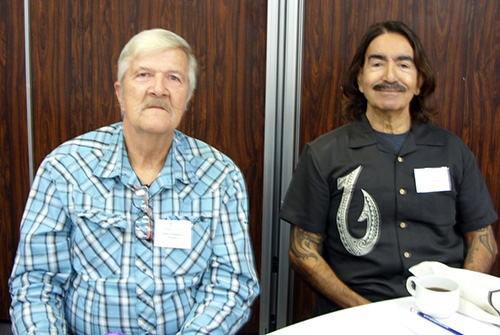
Gary won his second appeal and has been free for two decades. Yet, with a murder charge on his record, even though he was exonerated, he still struggles to find a job. He concluded by saying how much of a help Human Writes is to people on death row. He said that Human Writes saved his life when he was inside because the inmates’ bonds with family and friends tend to fracture and disappear. Today it still hard to escape the anger he feels at the judicial system, but he is working on it and has let much of it go. That said, it can still surface from time to time.
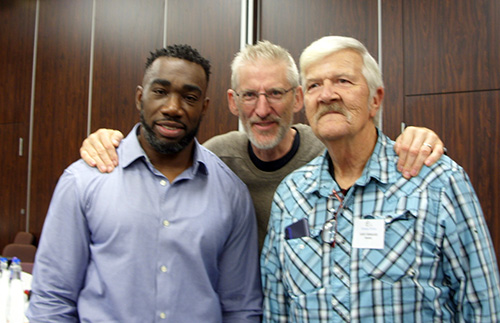
After an energetic question and answer session, the conference concluded with the lighting of two candles - one for the victims of crime and the other for those who have been executed (and, this year, including those who died during the Covid pandemic). Whilst this tradition at the end of each Human Writes conference leaves most people in a sombre and reflective mood, it was also an encouraging reminder that the work of everyone in the organisation has a deep and direct impact on some of the most forgotten people in our society.
In a Death Row prisoner‘s own words:
“I thanked God this morning for the lovely People in my life and for the overflowing gift of love that is in my heart for you and my penfriends. It‘s a very far step from the heart of ill emotions that I used to have years ago.”
“I thanked God this morning for the lovely People in my life and for the overflowing gift of love that is in my heart for you and my penfriends. It‘s a very far step from the heart of ill emotions that I used to have years ago.”
Human Writes Patrons
"The very essence of the death penalty is to tell people that they are somehow sub-human, not fit to live. Yet even those people I have represented who did what they were accused of - a surprisingly limited number - have always been much better people than their worst fifteen minutes, as are we all. Those who recognise this by reaching out to the men and women on death row are true heroes, though I suspect they gain as much as they give to the relationship."
Clive Stafford Smith OBE, Founder of Reprieve and Patron, Human Writes
"As a journalist who has lived and worked in the United States, the horror of death row is one of the issues that never leaves you. The thread of humanity that Human Writes manages to sustain with men and women on death row is a profound contribution to keep alive the hope of life. Capital punishment is now on the retreat in America, but the numbers awaiting their fate are still very considerable. I am very honoured to have become a Patron of Human Writes and will hope to do my best to put my shoulder to the wheel".
Jon Snow Broadcaster and journalist, Patron, Human Writes
"I know what it is like to live in a cell for decades and feel that the whole world hates you. I never expected to be able to live again as a contributing member of a community. Prison life was precarious and unpredictable but I met people who worked there who wanted to help me and people like me - and I'm lucky that I live in a society graceful enough to offer me a second chance. At least I had hope. Hope for many of the people supported by Human Writes has all but been extinguished. Letters to people on Death Row let them know that however low they may have fallen, they are still human beings. They still have value and are worth caring about and letters might just help to keep hope alive. That is why I am honoured to have been invited to be a patron."
Erwin James 1957 - 2024, author and Guardian columnist, Patron, Human Writes
Past Reports
Prisoner Art and Writing


"The volunteers of Human Writes seek to hold out the hand of friendship to men and women facing the death penalty. I am pleased to encourage them in their writing"
Most Reverend and Rt Hon George L Carey, former Archbishop of Canterbury
"No matter its circumstances, dying is one of the most important things we ever do. I applaud all who offer compassion and hope to those facing death, especially in the terrible circumstances of Death Row. May God bless your work."
His Eminence Cardinal Vincent Nichols, Archbishop of Westminster