
- Conference Report 2025
- Conference Report 2024
- Conference Report 2023
- Conference Report 2022
- Conference Report 2021
- Conference Report 2020
- Conference Report 2019
- Conference Report 2018
- Conference Report 2017
- Conference Report 2016
- Conference Report 2015
- Conference Report 2014
- Conference Report 2013
- Conference Report 2012
- Conference Report 2011
- Conference Report 2010
- Conference Report 2009
- Conference Report 2008
- Conference Report 2007
- Conference Report 2006
- Conference Report 2005
- Conference Report 2004
Conference Report 2014
This year we once more had a large attendance at our annual conference, held at the Royal National Hotel on 11th October. Katy Amberley opened the day, welcoming all and making some general announcements before introducing our first speaker, Pablo Stewart.
Pablo reiterated how much letters from the outside world mean to prisoners, based on his experiences with them, and he urged penfriends not to stop writing, even if there were times of limited response. He went on to clarify the current situation regarding the death penalty in the US, with examples and special reference to Arizona and California. In the latter a law has now been passed which prevents the mentally sick being placed in solitary confinement, since it has been proven that this is likely to exacerbate their illness. This law could affect as many as 25,000 inmates (there are 165,000 inmates in California, compared to 85,000 in this country). Pablo also mentioned the recent ruling by a district judge that the death penalty is dysfunctional in California, and unconstitutional since those condemned (currently 746) are not executed but instead spend decades in prison. He explained that change only happens in the US through legal challenges.
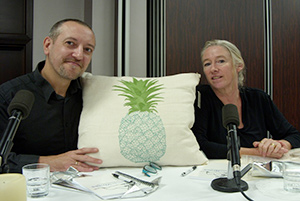
Our second speakers were representatives from Fine Cell Work, a charity which teaches fine needlework to inmates. The work is subsequently sold on behalf of the prisoners. Katy Emck, Development Director, explained that inmates work for up to forty hours a week on their sewing and find that it helps them to survive the stress of prison life and combat depression. Martin explained how working with Fine Cell Work in prison during a three-year sentence had helped him to turn his life around and enabled him to find a job and achieve success in the curtain making business. Both speakers stressed the importance of allowing inmates to achieve and to feel that they have some share in the lives of those outside.
Our main speaker for the day was Erwin James, writer and journalist for The Guardian. Erwin opened by warmly emphasising the importance of letters to inmates. His experience was first hand since he had served a twenty-year sentence for murder. His first memories of letters dated back to his years in a care home as a child when he said it had been known for boys to swap a pudding for a letter.
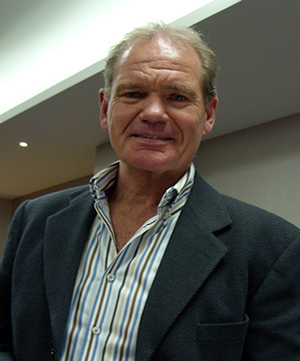
To those incarcerated, he continued, letters were "little bits of magic", "lifted spirits", "a welcome distraction", "the most precious thing that happens to them" and "beacons of hope shining a message that someone cares". He himself had hit rock bottom in 1984 when he was relieved to be given a life sentence and then went on to experience the doubt and dread which must be familiar to Death Row inmates. During his first year of incarceration in solitary in Wandsworth Prison he felt he would never adapt to the enclosed existence - introverted and vulnerable - 'unbearably fragile' and yet having to look like a tough guy.
However, he survived that first year focussing on physical fitness together with gradually expanding his knowledge and awareness by reading widely through the six books a week he was allowed from the prison library. When he moved on from Wandsworth to a prison with more facilities, he started to have hopes that he could change himself, and with encouragement from a prison psychologist that is just what he did, evolving from an "ill-educated brute" to someone able to feel remorse, and encouraged by the suggestion that he owed it to his victims to do the best he could with his life, and be someone with moral awareness of society as an entity.
Erwin became a writer of letters for other prisoners, and eventually of books as well. He mentioned two works which he had found particularly significant: most importantly Prisoners of Honour About the Dreyfus Affair by David Levering Lewis which particularly inspired Erwin in the early days of his journey, and much later, In the Place of Justice by ex-Death Row prisoner Wilbert Rideau who, speaking of punishment, said he "never knew a single person who was made better by hurting them".
Erwin was outspoken about how prisons should be improved to become places where good can be achieved rather than be negative, deprived and hostile environments. Life, he concluded, is a life-long journey for all of us on which we should try to become the person we should be.
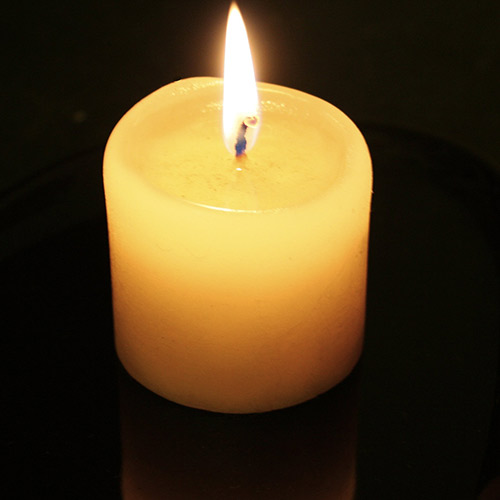
Sue Fenwick, Human Writes founder, concluded the afternoon with warm thanks to Erwin for his inspirational talk, and to Pablo and Fine Cell Work whose talks had also been very much appreciated and enjoyed and which had given all those who attended more insight into day-to-day prison life. There followed the lighting of the two candles - one to remember our US friends who are no longer with us, together with those remaining on Death Row, and the second for victims of crime and those who were close to them. This was followed by one minute of silence. Sue then thanked Sonya Woodsend and Cath Casburn who had organised yet another inspirational conference, and also warmly acknowledged the contributions within HW from our secretary, co-ordinators and all other office holders. She ended with thanks to our members for all their support and encouragement which contribute so much to making Human Writes the strong, ever growing organisation that it is today.
With thanks to Sue herself for holding the whole organisation together, Katy closed the proceedings of the 2014 conference.
Report by Sheila Michell
In a Death Row prisoner‘s own words:
“You asked if all is well between us and are we still good friends. In one word Absolutely. Monica has come to be a very valued friend, she is patient and kind in her responses as well as quite timely and consistent. Truly she is a rare blessing in that so many come only to go shortly after. She has stayed and stayed steady.”
“You asked if all is well between us and are we still good friends. In one word Absolutely. Monica has come to be a very valued friend, she is patient and kind in her responses as well as quite timely and consistent. Truly she is a rare blessing in that so many come only to go shortly after. She has stayed and stayed steady.”
Human Writes Patrons
"The very essence of the death penalty is to tell people that they are somehow sub-human, not fit to live. Yet even those people I have represented who did what they were accused of - a surprisingly limited number - have always been much better people than their worst fifteen minutes, as are we all. Those who recognise this by reaching out to the men and women on death row are true heroes, though I suspect they gain as much as they give to the relationship."
Clive Stafford Smith OBE, Founder of Reprieve and Patron, Human Writes
"As a journalist who has lived and worked in the United States, the horror of death row is one of the issues that never leaves you. The thread of humanity that Human Writes manages to sustain with men and women on death row is a profound contribution to keep alive the hope of life. Capital punishment is now on the retreat in America, but the numbers awaiting their fate are still very considerable. I am very honoured to have become a Patron of Human Writes and will hope to do my best to put my shoulder to the wheel".
Jon Snow Broadcaster and journalist, Patron, Human Writes
"I know what it is like to live in a cell for decades and feel that the whole world hates you. I never expected to be able to live again as a contributing member of a community. Prison life was precarious and unpredictable but I met people who worked there who wanted to help me and people like me - and I'm lucky that I live in a society graceful enough to offer me a second chance. At least I had hope. Hope for many of the people supported by Human Writes has all but been extinguished. Letters to people on Death Row let them know that however low they may have fallen, they are still human beings. They still have value and are worth caring about and letters might just help to keep hope alive. That is why I am honoured to have been invited to be a patron."
Erwin James 1957 - 2024, author and Guardian columnist, Patron, Human Writes
Past Reports
Prisoner Art and Writing

"The volunteers of Human Writes seek to hold out the hand of friendship to men and women facing the death penalty. I am pleased to encourage them in their writing"
Most Reverend and Rt Hon George L Carey, former Archbishop of Canterbury
"No matter its circumstances, dying is one of the most important things we ever do. I applaud all who offer compassion and hope to those facing death, especially in the terrible circumstances of Death Row. May God bless your work."
His Eminence Cardinal Vincent Nichols, Archbishop of Westminster